.png)
Speakers.
Hear from experts and leaders bringing experience from healthcare, science, technology and public service to the conversations at this year's summit.
Further speaker announcements will follow

Jesper Møller Sørensen
Ambassador of Denmark to the United States
Royal Danish Embassy, Washington, D.C.
Jesper Møller Sørensen is the Ambassador of Denmark to the United States, representing the Danish government in Washington, D.C. A career diplomat since 1997, he previously served as State Secretary for Foreign Policy and Political Director at Denmark’s Ministry of Foreign Affairs. His overseas postings include Ambassador to Pakistan, Deputy Ambassador to Afghanistan, and Minister Counsellor for Political Affairs in Washington. Earlier in his career, he worked on security policy and also served with the EU’s European External Action Service.

Ryan McKindles, PhD
Associate Leader, Human Health and Performance Systems Group
MIT Lincoln Laboratory
Dr. Ryan J. McKindles is Associate Leader of MIT Lincoln Laboratory’s Human Health and Performance Systems Group, where he helps lead research developing medical technologies across areas including neuroscience, biomechanics, medical imaging, wearable technologies, and human performance. Since joining MIT Lincoln Laboratory in 2015, he has helped establish its STRIVE Center and served as the center’s first research director. His recent work includes research on AI-enabled field triage to support early point-of-injury assessment of civilian and military trauma patients and predict critical care needs, including massive transfusion, intensive care, and mechanical ventilation. McKindles holds a PhD in biomedical engineering from Marquette University.

Steen Søndergaard
Chief Scientist
NATO
Steen Søndergaard serves as NATO’s Chief Scientist, acting as senior scientific advisor to NATO leadership, Chair of the Science & Technology Board, and Head of the Office of the Chief Scientist. With more than 30 years of experience in defence science and technology, he previously led Denmark’s Defence Research Center, overseeing work at the intersection of military research, technology, and innovation. His career has focused on translating scientific and technological advances into operational and strategic advantage, including work related to emerging technologies and resilience.

Annemarie Falktoft
Deputy Director, Research & Research-based Innovation
Danish Agency for Higher Education and Science
Annemarie Falktoft is Deputy Director-General for Research and Research-based Innovation at the Danish Agency for Higher Education and Science, where she is responsible for the agency’s work across research and knowledge-based innovation. She has worked within Denmark’s higher education and research administration since 2008 and previously served as Head of Department for Research and Innovation Policy at the Ministry of Higher Education and Science. Her career spans national and European research and innovation policy, with recent work involving research infrastructure, digitalisation, and the development of Denmark’s research and innovation ecosystem. She holds master’s degrees from the University of Cambridge and the University of Copenhagen.

Jeffrey Palmer, PhD
Assistant Division Head, Biotechnology and Human Systems
MIT Lincoln Laboratory
Dr. Jeffrey S. Palmer is Assistant Head of MIT Lincoln Laboratory’s Biotechnology and Human Systems Division, sharing responsibility for research, development, evaluation, and technology transfer across chemical and biological defense, human health and performance, and global resilience to climate, conflict, and disaster threats. Previously, he led the Human Health and Performance Systems Group, overseeing work in AI-enabled biomedical tools, human performance, neurocognitive analytics, and wearable, ingestible, and implantable biosensing. He has also advised U.S. and NATO military studies on health and performance and has contributed extensively to wearable biomedical sensing in extreme environments.

Homer Tien, MD
President and CEO
Ornge
Dr. Homer Tien is President and CEO of Ornge, Ontario’s air ambulance and critical care transport service, and a trauma surgeon at Sunnybrook Health Sciences Centre. A former Canadian Armed Forces colonel and frontline military physician, he served as a surgeon and medical officer in Afghanistan and other international deployments. He has helped advance health equity in Ontario’s remote Indigenous communities, including through Operation Remote Immunity. In 2025, he was appointed a Member of the Order of Canada for his contributions to trauma care in remote settings and for strengthening connections between civilian and military healthcare.
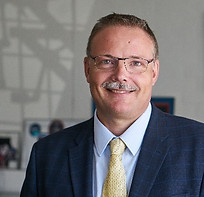
Thomas Andersen
CEO
Danish Aerospace and Defense Company
Thomas A.E. Andersen is CEO of Danish Aerospace and Defence Company, which develops biomedical, exercise, and health-monitoring technologies for human spaceflight and other extreme environments. An electrical engineer from the Technical University of Denmark, he joined the company’s predecessor, DAMEC Research, after graduating and worked across product development and operations before becoming CEO in 2011. His career spans more than three decades of developing and bringing highly reliable technologies into environments where human health, performance, and equipment reliability are critical.

Luke Apisa, md
Emergency Medicine Physician & Assistant Fellowship Director
Mass General Brigham & MGH Division of Wilderness Medicine
Luke Apisa is the Assistant Fellowship Director of the MGH Division of Wilderness Medicine and the inaugural fellow of MGH’s Space Medicine program. Dr. Apisa is a Clinical Instructor of Emergency Medicine at Harvard Medical School. He continues to be active in Arctic affairs through the Harvard Kennedy School’s Arctic Initiative and ongoing work with the Maniilaq Health Center in Kotzebue, AK on quality improvement, virtual medicine, and austere healthcare. During his fellowship year he spent a season researching changes in human cardiopulmonary dynamics at altitude in Pheriche, Nepal. Ongoing topics of interest include high altitude pathology and the application of terrestrial hypobaric hypoxia research to space vehicle atmospheric design.

John Aldridge
Associate Leader, Human Resilience Technology Group
MIT Lincoln Laboratory
John Aldridge is Associate Leader of MIT Lincoln Laboratory’s Human Resilience Technology Group, where his work focuses on applying advanced and emerging technologies to human and community resilience. Over more than two decades at the Laboratory, he has led interdisciplinary programs spanning decision-support systems, sensor technologies, disaster response and recovery, airborne remote sensing, tactical sensing, and humanitarian assistance. His work places particular emphasis on adapting technology for challenging and nontraditional environments and translating real-world operational needs into practical capabilities.

Corinne Wood, MPH, MS
Director of Operational Excellence
Henry Ford Health
Corinne Wood is Director of Operational Excellence at Henry Ford Health, where her work focuses on improving healthcare operations, care transformation, and patient throughput across complex clinical environments. Her background includes healthcare operations and digital transformation, with experience supporting technology-enabled process improvement and cross-functional change. She holds graduate training in public health and has completed additional professional education in digital transformation in healthcare and design-driven innovation.
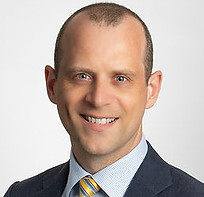
Erik Waldorff, phd, mba
Senior Director of Innovations Technology Development
Cleveland Clinic
Dr. Erik Waldorff is Senior Director of Innovations Technology Development at Cleveland Clinic, where his work focuses on advancing medical technologies from early-stage development toward clinical application within the health system. In addition, he serves as the Honorary Consul of Denmark for the state of Ohio. Trained in biomedical and aerospace engineering, his background spans medical-device research, development, and translation. His work also engages with Hospital at Home and distributed-care models, exploring how technology can help extend healthcare beyond traditional hospital settings and expand access to care.
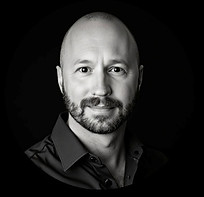
anders damm-hejmdal, md
Chief physician of Ambulance and Pre-Hospital preparedness
Region H
Dr. Anders Damm-Hejmdal is Chief Physician in Emergency Medical Service Capital Region of Denmark with medical leadership responsibilities across 1-1-2 emergency dispatch and ambulance care. A consultant anesthesiologist and Clinical Teaching Associate Professor at the University of Copenhagen, his work spans both practical and strategic prehospital emergency medicine, major-incident preparedness, and disaster medicine. Alongside his operational leadership, he contributes to research and education focused on strengthening emergency and out-of-hospital care.
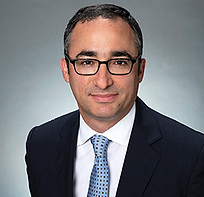
Roger Cohen
Partner, healthcare
Goodwin
Roger A. Cohen is a partner in Goodwin’s Healthcare practice, advising healthcare services, life sciences, digital health, and investor clients on the regulatory and transactional issues shaping healthcare delivery. His work spans telemedicine, artificial intelligence, remote patient monitoring, healthcare privacy, reimbursement, and complex healthcare transactions. Since 2017, he has also served as a Lecturer at Weill Cornell Graduate School of Medical Sciences, where he teaches healthcare law in the Executive MBA/MS in Healthcare Leadership program.

Frank Papay, MD, FACS
Chair, Dermatology & Plastic Surgery Institute
Cleveland Clinic
Dr. Frank Papay is Chair of Cleveland Clinic’s Dermatology & Plastic Surgery Institute and Section Head of Craniofacial Plastic and Reconstructive Surgery. With a background that includes biomedical engineering, his career combines complex reconstructive surgery with medical technology and surgical innovation. He helped lead Cleveland Clinic’s first total face transplant in 2017, which incorporated augmented reality and 3D technologies into surgical planning. His innovation work has also included medical-device development, patented technologies, and AI- and augmented reality-enabled tools designed to provide surgeons with real-time information.

Svend Særkjær
CEO
Danish Regions
Svend Særkjær is CEO of Danish Regions, representing the collective interests of Denmark’s five regions and helping lead their work on the implementation of national health reform. He brings extensive experience from across the Danish healthcare system, having previously served as Permanent Secretary at the Ministry of the Interior and Health and as Regional Director in both the Capital Region of Denmark and the North Denmark Region. Earlier in his career, he held several senior positions within the Danish health ministry, including roles focused on health economics and welfare policy.

Oleksandr heiko, mD
Director
Regional Territorial Medical Association of Kramatorsk
Dr. Oleksandr Heiko is Director of the Regional Territorial Medical Association of Kramatorsk. A graduate of Donetsk Medical University, he previously led a private multidisciplinary medical facility in Donetsk before relocating to Kramatorsk in 2014, where he joined the regional oncology hospital as Deputy Chief Physician and helped establish new services in pediatric surgery, cardiac surgery, and hemodialysis. He later led the organization’s development into a multidisciplinary regional medical association. Since 2022, he has overseen the relocation of staff and medical equipment while maintaining care in Kramatorsk and establishing services in western Ukraine.

Jacob Ravn
Chief Innovation Officer & Head of the Innovation Clinic
North Denmark Region
Jacob Ravn leads the Innovation Clinic in the North Denmark Region, supporting clinicians and researchers in developing, testing, and scaling new healthcare solutions. His work spans public-private innovation, technology development, commercialization, and collaboration across healthcare, academia, and industry. Current initiatives include the use of AI and digital solutions to support care in rural and home settings, as well as cross-sector collaboration between healthcare, prehospital services, and the Danish Defence Health Service to strengthen medical preparedness and resilience.

Jeppe Larsen
Director of Department, Medical Devices
Danish Medicines Agency
Jeppe Larsen is Director of the Medical Devices Department at the Danish Medicines Agency, where he leads Denmark’s regulatory work on medical devices and in vitro diagnostics. He represents Europe in international medical-device regulatory cooperation and has been closely involved in work on AI, digital health, and global regulatory harmonization. Larsen previously co-chaired the HMA-EMA Big Data Steering Group, supporting the development of European approaches to data and regulatory science. Before joining the Danish Medicines Agency, he worked with operational excellence and transformation at Implement Consulting Group.
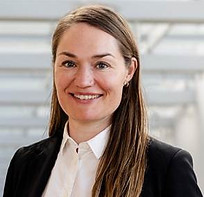
Kirstine Lærum Sibilitz, MD, PhD, MPH
Deputy Chief Executive
Rigshospitalet
Dr. Kirstine Lærum Sibilitz is Deputy Chief Executive at Rigshospitalet, with responsibility for the Heart Centre as well as patient safety, quality, and infection control. A cardiologist by training, she previously served as Chief Physician of the Department of Cardiology at Amager and Hvidovre Hospital and as a consultant at Rigshospitalet. Her clinical, research, and leadership experience spans cardiovascular care, rehabilitation, and major organizational change. More recently, she has also contributed to the development of specialized home treatment and new models for delivering hospital-level care closer to patients.
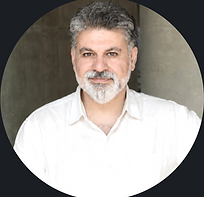
Koray Karakaya, PhD
Senior Innovation Coach
BioMedical Design Novo Nordisk Foundation Fellowship Programme
Dr. Koray Karakaya is Senior Innovation Coach at the BioMedical Design Novo Nordisk Foundation Fellowship Programme, where he supports the development of healthcare innovations from identified clinical needs toward practical solutions. With a PhD in Applied Physics, his career has spanned healthtech, medtech, digital innovation, AI, and new business creation. He previously served as Innovation Lead at Philips HealthWorks, focusing on healthcare innovation and ecosystem collaboration, and today also contributes to Denmark’s broader innovation landscape through advisory and mentoring roles.

Malene Fischer, MD, PhD, DMSc
Deputy Chief Executive, Research & Innovation
Rigshospitalet, Capital Region of Denmark
Dr. Malene Fischer is Deputy Chief Executive for Research & Innovation at Rigshospitalet, with responsibility for research, innovation, partnerships, and data. A specialist in clinical physiology and nuclear medicine, she previously served as Head of the Department of Physiology and Nuclear Medicine at Rigshospitalet and as Clinical Professor at the University of Copenhagen. Her research has focused on advanced imaging technologies, including PET/CT and PET/MR, and their application in precision medicine, particularly within cancer diagnostics.
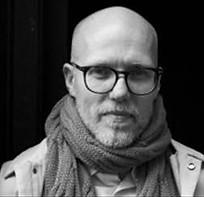
Martin Vesterby, MD, PhD
Head of Crisis Resiliency and Health Innovation
Danish Technological Institute
Dr. Martin Vesterby is Head of Crisis Resiliency and Health Innovation at the Danish Technological Institute, where he leads work on need-driven healthcare innovation for crisis and resource-constrained environments. A medical doctor with a PhD in telemedicine and innovation, his career spans clinical medicine, research, entrepreneurship, and healthcare innovation. He also leads Project Jutlandia, an initiative focused on developing and implementing scalable health solutions for crisis settings, and serves as Deputy Chair of Innovation Fund Denmark’s Defence Expert Panel Committee.

Peter Norsk, MD, DMSc
Space Medicine Researcher
Former NASA Human Research Program Element Scientist
Dr. Peter Norsk is a physician and space medicine researcher whose career has focused on how the human body adapts to spaceflight and altered gravity. He previously served as Professor of Gravitational and Space Physiology at the University of Copenhagen before joining NASA’s Human Research Program, where he worked on human health countermeasures for long-duration spaceflight. His research has included ten in-flight experiments aboard the Space Shuttle, Mir, and the International Space Station, with a particular focus on cardiovascular physiology, fluid regulation, and protecting human health during exploration missions. In 2025, he received the Space Medicine Association’s Jeffrey P. Sutton Scientific Achievement Award.
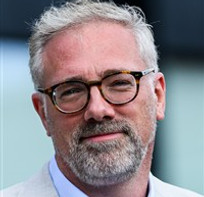
Andreas Worberg, Dr. rer. nat.
Head of Center
Biosolutions DTU
Dr. Andreas Worberg is Head of Biosolutions DTU – Centre for Biosolutions, where he leads efforts to connect biotechnology research with industry, public authorities, and other partners to accelerate the development and scaling of biological solutions. Before taking on the role in 2026, he served as Chief Commercial Officer at DTU Biosustain, with responsibility for commercialization, industrial partnerships, and bioprocess scale-up. His earlier career included senior engineering and business-development roles at thyssenkrupp, working with industrial biotechnology and the commercialization of bio-based process technologies.

Jeffrey Scott Saunders
Strategic Advisor
National Defence Technology Centre (NFC)
Jeffrey Scott Saunders is Strategic Advisor at Denmark’s National Defence Technology Centre, working at the intersection of defence technology, strategic foresight, and innovation. He leads NFC’s involvement in the Next Generation Cyber Security initiative, connecting research and industry to accelerate new solutions for cybersecurity and critical infrastructure. Previously, he held senior roles at the Copenhagen Institute for Futures Studies and worked as a national security consultant in the United States, advising governments and international organizations. His current work includes emerging technologies, technological sovereignty, cyber resilience, and the implications of AI and autonomous systems for defence and security.